Herbert Bayer belongs to the Bauhaus the way a hinge belongs to a door: he moved between sides. He arrived in Weimar in 1921 as a student of the preliminary course, left, came back to Dessau in 1925, and ran the typography and advertising workshop there until 1928. Whether that makes him "a teacher at the Bauhaus" depends entirely on what the asker means by teacher, by Bauhaus, and by when. This article is a flowchart in prose. We will ask three questions. Answer them in order, and the historical record answers itself.
Question 1: Are You Asking About Bayer the Student, or Bayer the Staff Member?
This is the first fork because most people conflate the two eras of Bayer at the school. The Bauhaus produced two kinds of famous alumni: those who passed through and left, and those who passed through and were asked back. Bayer did both, which is why the biographical sentence most sources settle for — "Bayer was at the Bauhaus" — is accurate in a way that is also useless. The question matters because the answer tells you which part of the Bauhaus story Bayer belongs to: the pupil generation that absorbed the preliminary course and dispersed, or the junior-master cohort that was asked to stay and run a workshop.
If Yes, the Student
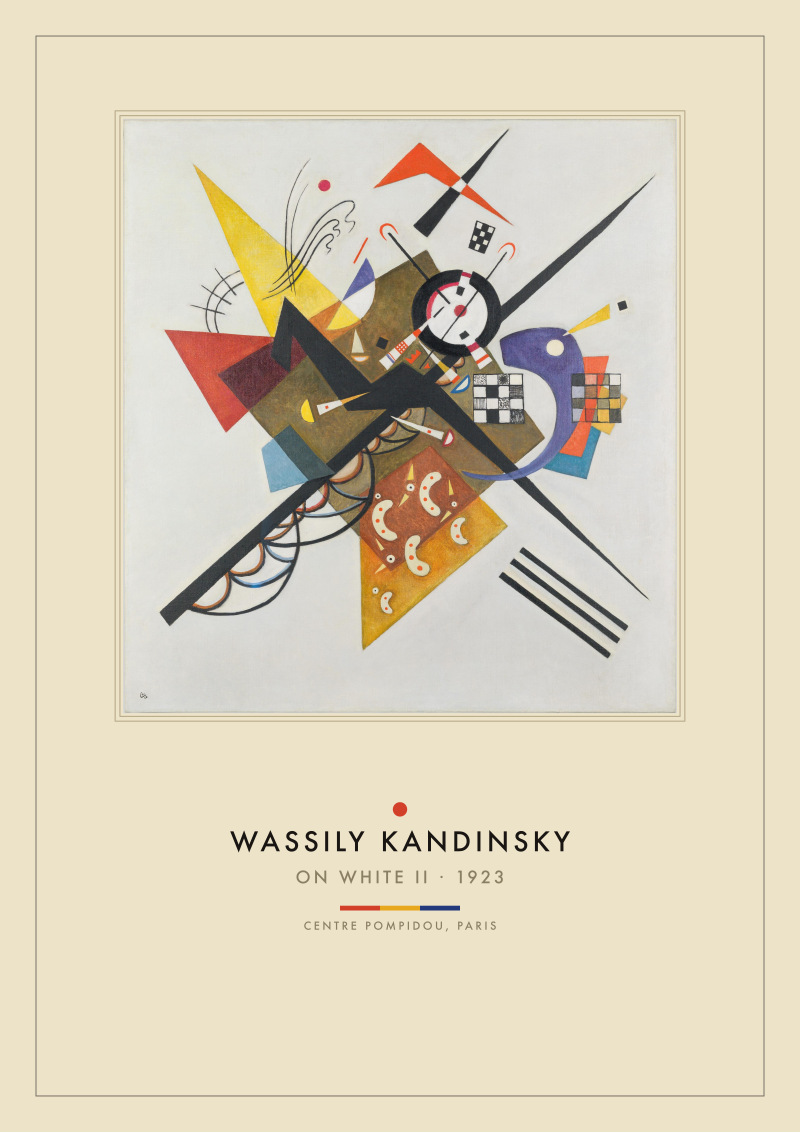
The student Bayer arrived in Weimar in 1921, at twenty-one, and enrolled in the preliminary course — the Vorkurs, the compulsory first exercise every student began with before being admitted to a workshop. He studied under Johannes Itten, who ran the course in those early Weimar years with the mystic austerity that eventually got him pushed out. Bayer then moved into the mural workshop and worked under Wassily Kandinsky. In this reading, Bayer the student is a figure in the second intake of Weimar pupils, one of the first generation of young people shaped by the preliminary course rather than by prior academy training. He was not a teacher during this phase. He was in the room learning to see.
If No, the Staff Member
The Bayer the question is usually about is the one who returned in 1925, after the school's move from Weimar to Dessau. He was invited back by Walter Gropius as part of the first cohort of former students promoted to run workshops themselves — Jungmeister, junior masters. Bayer took charge of the newly founded typography and advertising workshop. He stayed in that role until 1928, when he resigned alongside Gropius, Moholy-Nagy, and Marcel Breuer in the wave of departures that reshaped the school's second phase. If "teacher at the Bauhaus" is the phrase, this is the window the phrase refers to: Dessau, 1925 to 1928, running the print workshop, inventing the lowercase universal alphabet, designing the house typography that became the school's visual signature.
Question 2: Does "Teacher" Mean Master, Jungmeister, or Workshop Lead?
This second fork is the one that trips up readers who have skimmed too many museum captions. Bauhaus faculty did not share a single rank, and English flattens the distinctions into one word that erases the political argument the school was having with itself. The question matters because calling Bayer "a master" is wrong, calling him "a lecturer" undersells it, and calling him "a professor" imports a university category the Bauhaus deliberately refused. The right word tells you both what Bayer did and how the school thought about who was allowed to teach.
If You Mean Master in the Original Sense
In Weimar, the Bauhaus staff was organised around the medieval workshop model Gropius had borrowed as a founding metaphor. Each workshop had two leads: a Formmeister, who taught form and composition, and a Werkmeister, who taught the craft. The Formmeister ranks were held by the famous names — Kandinsky, Klee, Feininger, Schlemmer, Moholy-Nagy, Albers eventually. These were the masters in the full original sense. Bayer never held this rank. He was never a Formmeister in Weimar, and when he returned to Dessau the rank structure itself was being rebuilt. So if "teacher at the Bauhaus" means a founding master in the Weimar sense, the answer is no.
If You Mean Jungmeister
The Jungmeister rank — young master, junior master — was a Dessau invention. Gropius created it in 1925 to promote a specific cohort of former Bauhaus students to teaching positions, so the school could be led by people trained inside it rather than imported from academies. The first Jungmeister appointments were Josef Albers, Marcel Breuer, Herbert Bayer, Hinnerk Scheper, Joost Schmidt and Gunta Stölzl. In this reading, the answer is yes, unambiguously. Bayer was one of the six original Jungmeister. He ran a workshop, taught the students admitted to it, and sat at the staff table.
If You Mean Workshop Lead, Lecturer, or Anything Looser
The typography and advertising workshop had not existed before Bayer. He founded it, taught in it, and left the house style he built as its curriculum. The students who passed through produced the posters, exhibition catalogues, and press advertisements that are today the visual shorthand for the Dessau period. If "teacher" means the person responsible for what students in a workshop learned and produced, Bayer meets that definition for three years without qualification.
Question 3: Which Bauhaus Are You Asking About — Weimar, Dessau, or Berlin?
The school existed for fourteen years and in three cities. Weimar, 1919 to 1925. Dessau, 1925 to 1932. Berlin, 1932 to 1933. The three phases were different schools in important ways: different buildings, different directors, different political pressures, different curricula. Readers who ask about Bauhaus teachers without specifying which Bauhaus end up with answers that treat the fourteen years as a single flat institution, which it emphatically was not. The question matters because Bayer's role was confined to a narrow window, and the window closed well before the school did.
If You Mean Weimar
In Weimar, Bayer was a student. Not a teacher, not a Jungmeister, not a workshop lead. He was in the preliminary course, then in Kandinsky's mural workshop, then increasingly involved in exhibition design around the 1923 Bauhaus Week — but as a student contributor, not as faculty. If someone asks whether Bayer taught at the Weimar Bauhaus, the honest answer is no.
If You Mean Dessau
Dessau is where the sentence "Bayer taught at the Bauhaus" earns its keep. He was Jungmeister of the typography and advertising workshop from 1925 to 1928. The workshop designed everything the school published during those years: the quarterly magazine, the Bauhaus books series, the municipal commissions Gropius pursued to prove the school could pay rent. Bayer's lowercase typographic standard — the argument that German print should abandon capital letters because the voice does not pronounce them — came out of this workshop. His universal alphabet, drafted in 1925, was never commercialised but defined the house face.
If You Mean Berlin
By the time the school moved to Berlin in 1932, under Mies van der Rohe's directorship, Bayer had been gone for four years. He left Dessau in 1928, took a job as art director at Vogue's Berlin office, and spent the next five years working commercially in the city. When the Berlin Bauhaus was forced closed by the Nazi state in 1933, Bayer was there as a resident designer, not as faculty. If the question is about the Berlin phase, he was not a teacher.
If You Answered Everything
Here is the full map. Three questions, eight combinations, one recommendation each — the sentence to use if your three answers match the row.
| Q1 (Student / Staff) | Q2 (Rank) | Q3 (Which city) | Recommendation |
|---|---|---|---|
| Student | Master | Weimar | No. Bayer was a Weimar student, never a Formmeister. |
| Student | Jungmeister | Weimar | No. The Jungmeister rank did not exist in Weimar. |
| Student | Workshop lead | Weimar | No. Bayer led no workshop as a Weimar student. |
| Staff | Master | Dessau | No. He was a Jungmeister in Dessau, not a Formmeister. |
| Staff | Jungmeister | Dessau | Yes. Bayer was Jungmeister of typography, 1925–1928. |
| Staff | Workshop lead | Dessau | Yes. He founded and ran the typography and advertising workshop. |
| Staff | Any rank | Berlin | No. He had resigned four years before the Berlin phase opened. |
| Student | Any rank | Berlin | No. He was neither student nor staff in Berlin. |
The rows that return a yes are narrow on purpose. The honest sentence is this: Herbert Bayer was a teacher at the Dessau Bauhaus from 1925 to 1928, holding the junior-master rank Gropius had invented for the first cohort of in-house promotions, running the typography and advertising workshop. Anything broader than that sentence is a caption trying to say two things at once.
The reason the question keeps coming back is that Bayer's post-Bauhaus work — the Vogue years, the exile to the United States in 1938, the Container Corporation of America years in Chicago and Aspen — kept the Bauhaus visual grammar circulating in commercial print long after the school had closed. His career is one of the main reasons the house style survived into American advertising at all. That carries a weight that makes people want to credit him with more years at the school than he actually taught. The three years are the three years. They were enough.
The Dessau workshop he ran is, incidentally, where the generative logic the studio works in today began as pedagogy: a modular grid of circles, arcs and bars in primary colour was the first exercise every student began with. We set that exercise as a poster called Foundation in our own catalogue at the studio shop, because the preliminary course was the whole idea.
FAQ
When exactly did Herbert Bayer teach at the Bauhaus?
Bayer taught at the Dessau Bauhaus from 1925 to 1928. He had been admitted as a student in Weimar in 1921, left the school, and returned four years later when Gropius invited him back as a Jungmeister to run the newly founded typography and advertising workshop. He resigned in 1928, in the same cluster of departures that took Gropius, Moholy-Nagy and Breuer out of the school's day-to-day teaching staff.
What is a Jungmeister and why does the word matter?
Jungmeister translates as junior master or young master. Gropius created the rank in Dessau in 1925 to promote six former Bauhaus students to teaching positions: Albers, Breuer, Bayer, Scheper, Schmidt and Stölzl. The point was institutional. The school wanted to be led by people trained inside it rather than imported from traditional academies. Calling Bayer a Jungmeister is more precise than calling him a professor or a master, both of which import the wrong rank structure.
Did Bayer teach in Weimar before the move to Dessau?
No. In Weimar he was a student. He went through the preliminary course under Itten and then worked in the mural workshop under Kandinsky. He contributed to exhibition design around the 1923 Bauhaus Week, but as a student participant, not as faculty. He left Weimar before the 1925 move and only came back as staff once the school had reopened in Dessau.
What did Bayer actually teach in the typography workshop?
He taught the design of printed matter — books, posters, exhibition catalogues, press advertising — through the specific grammar he was developing in his own practice. The workshop built the house visual identity for the Dessau years: the Bauhaus quarterly, the Bauhaus books series, the external commissions. The lowercase universal alphabet he drafted in 1925 came out of this teaching, as did the argument that German print should abandon capital letters because speech does not distinguish them.
Why did Bayer leave the Bauhaus in 1928?
He resigned alongside Gropius, Moholy-Nagy and Breuer, in the wave of departures that followed Gropius's own decision to step down as director. The reasons were a mix of personal and political. Gropius wanted to return to private practice. Several Jungmeister felt the school needed new leadership to survive the hardening political climate in Germany. Bayer went to Berlin and took a commercial job as art director at Vogue's local office.
Was Bayer involved with the Berlin Bauhaus at all?
No, not as faculty. He had been out of the school for four years by the time it moved to Berlin in 1932 under Mies van der Rohe. He was living and working in Berlin as a commercial designer during the brief Berlin phase, so he was in the city when the school was forced closed by the Nazi state in 1933, but he had no teaching role in that final year.
Is it correct to call Bayer a Bauhaus master?
Only if you are using master loosely. In the strict Weimar sense, master meant Formmeister or Werkmeister, the senior ranks held by figures like Kandinsky, Klee and Feininger. Bayer never held that rank. He held the Jungmeister rank, which was explicitly a junior tier created to promote in-house talent. The precise sentence is that Bayer was a junior master at the Dessau Bauhaus, not that he was a master at the Bauhaus.
What is the shortest honest answer to the original question?
Yes, Bayer taught at the Bauhaus — specifically at Dessau, between 1925 and 1928, as Jungmeister of the typography and advertising workshop he founded there. He did not teach at Weimar, where he was a student, and he did not teach at Berlin, where he was already working commercially by the time the final phase opened.
From the collection


New compositions and 10% off your first print.
One email now with your code. No noise after.