We have read a lot of articles on the connection between generative art and the Bauhaus. They arrive with the same three names, the same triangle-square-circle diagram, the same sentence about grids and code, and they leave the reader no closer to the actual link. The link is not aesthetic. It is pedagogical. The Bauhaus in Weimar in 1919, then Dessau in 1925, then Berlin until 1933, built a preliminary course that asked students to derive form from constraint. A generative composition built from a deterministic seed does the same work, by other means. That is the entire connection, and almost nobody writes it down.
What They All Get Wrong
The dominant framing is aesthetic. A generative sketch appears on the left, a Bauhaus poster on the right, and the caption claims lineage because both contain a red square, a blue circle and a black diagonal. The reasoning stops there. The article treats the Bauhaus as a visual style — primary colours, geometric shapes, sans-serif type — and generative art as the same style redrawn by a computer. It is a costume argument. The costume happens to be correct in a few cases and irrelevant in most. A tool that produces yellow triangles has not become Bauhaus by producing yellow triangles.
The second error is closely related. Coverage treats the Bauhaus as if it were a stylistic movement rather than a school. Movements are described by their surface: cubism has facets, surrealism has dreams, futurism has speed lines. The Bauhaus was not a movement in that sense. It was a fourteen-year teaching institution in three cities, with a curriculum, a faculty, workshops in weaving, metal, cabinetmaking, mural painting, typography, theatre and eventually architecture, and a specific first-year course through which every student had to pass. Reducing this to a colour palette is like reducing a conservatory to the shape of a violin.
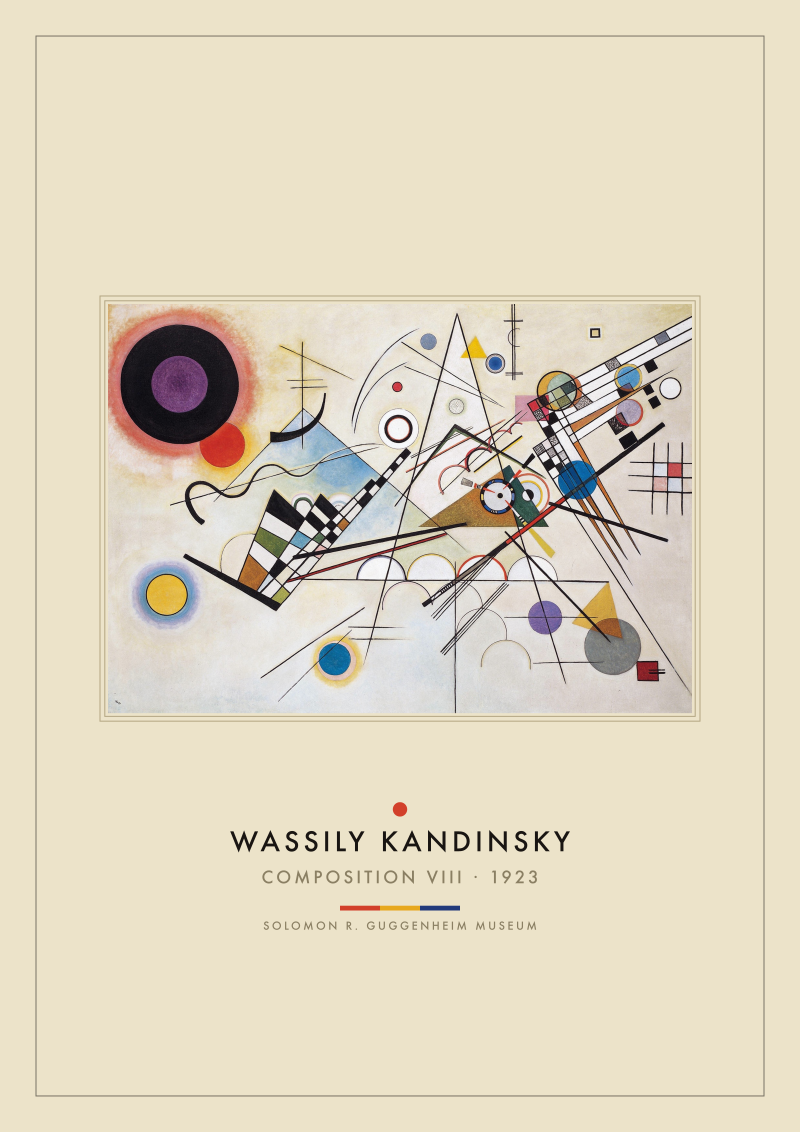
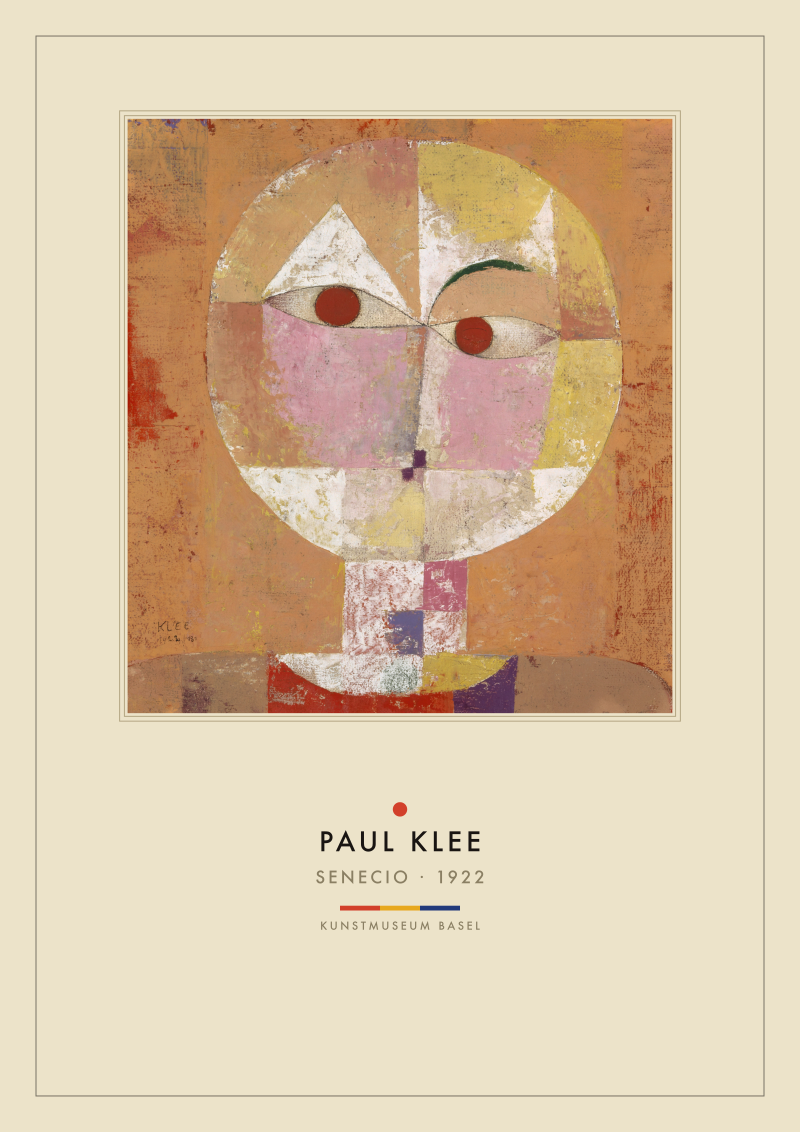
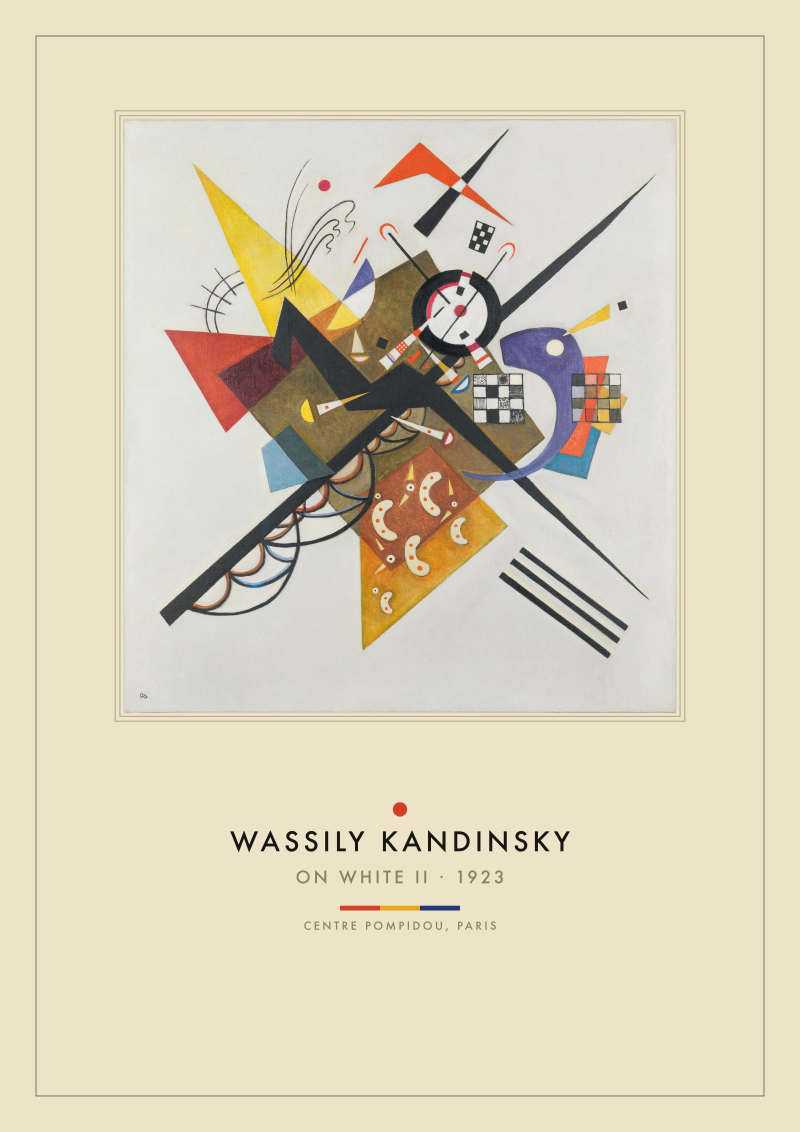
A third habit compounds the problem. The same three names appear in almost every piece: Kandinsky, Klee, Albers. The names are correct, but they are used as decorative attribution rather than as evidence. The reader is not told what these teachers actually did in the classroom, what exercises they set, what the students produced, or how those exercises would look transposed into a rule-based generative system. The names become sanctifying tokens. The argument does not get past them.
The fourth error is the phrase "code as the new medium of modernism", which is a sentence that has stopped meaning anything. It flatters both parties without committing to either. It implies the Bauhaus would have been in JavaScript if only browsers had existed, and it implies generative art is doing serious pedagogical work by virtue of running in a canvas element. Neither implication is defensible without argument, and the argument is never made.
The cumulative effect is that a reader finishes such an article convinced there is a connection and unable to say what it is. The connection has been asserted, illustrated, and never explained. This is the shared error. It is repeated because the aesthetic surface is easy to photograph and the pedagogical substance requires reading old syllabi.
What Is Almost Always Missing
What is missing is the preliminary course. In German, the Vorkurs. Every student who entered the Bauhaus, regardless of prior training, spent the first six months in it before they were allowed near a workshop. Johannes Itten built it. László Moholy-Nagy reshaped it after Itten left in 1923. Josef Albers ran it for years, first in Dessau, then continued the same thinking at Black Mountain College and Yale after the school closed under political pressure in 1933. This course is the load-bearing structure of any honest claim about Bauhaus influence, and it is almost entirely absent from writing on generative art.
The preliminary course was not a design class in the modern sense. It was a course in constraint. Students were given a material — paper, wire, wood, glass, sheet metal — and asked to discover what it could do without decoration, without reference to existing objects, and without importing style from outside. A sheet of paper had to yield forms that were inherent to paper. A wire had to yield forms that were inherent to wire. The premise was that if you understood the constraints of a material, form would follow. If you understood the constraints of colour, composition would follow. The teacher's role was to set the exercise and refuse to accept solutions that leaned on prior aesthetic habit.
This is the part that translates directly, and it is the part that never gets written. A generative composition made by code from a deterministic seed is exactly this kind of exercise. The seed and the algorithm are the constraint. The output is what follows when the constraint is honoured. Change the seed and you get a different valid outcome from the same rules, in the same way that a preliminary-course exercise on paper folding produced twenty different valid solutions from the same brief across a room of students. The rules are the pedagogy. The variation is the point.
Also missing: the fact that the Bauhaus's own compositions were often generated by rules the artist had set in advance. Kandinsky assigned colours to shapes on the basis of a theory he taught. Albers's later "Homage to the Square" series is a system, not a series of intuitions, and every canvas in it is an execution of the same tightly bounded set of parameters with the variables changed. The Bauhaus produced procedurally derived work long before there was a word for it. Writing that skips this makes the connection to generative art look like a stretch when it is not a stretch at all.
What I Would Say Instead
The connection between generative art and the Bauhaus tradition is not that they look alike. It is that they are made alike. Both begin with a constraint declared in advance, and both treat the outcome as the honest consequence of the constraint rather than the personal expression of the maker. The seed is a syllabus. The algorithm is the exercise. The composition is what the student turned in.
This reframing matters because it changes what counts as evidence. Under the aesthetic framing, a generative sketch is Bauhaus if it contains a triangle and a square. Under the pedagogical framing, a generative sketch is in the Bauhaus tradition if you can read the rule that produced it in the composition, in the same way a good Vorkurs paper study revealed the fold that made it. Foundation, one of our own compositions, is a modular grid of circles, arcs and bars in primary colour, and it is legible as a rule set: the grid is the rule, the shapes are the vocabulary, the colour is the palette. It is the first exercise every student began with, set as a poster. It is not a decoration of the preliminary course. It is the preliminary course.
The same reading applies to the others. Archway is nested arcs rising from the base like a gateway, concentric bands of period colour in careful sequence. The rule is visible: an arc, a next arc inside it, a decision about spacing, a decision about which band gets which colour. Ascending Forms is rectangles climbing the frame in measured steps. The rule is visible again: a rectangle, a step upward, a proportion held across steps. Dessau Morning stacks horizontal bands under a low sun and does its work in the warm palette of a workshop at dawn. In each case, changing the seed would produce a different valid instance of the same argument, exactly as changing the student would produce a different valid instance of Albers's paper exercise.
This is why we build our compositions this way and sell them at /shop/ under this framing. The pieces are not Bauhaus-styled decor. They are what the preliminary course looks like when it is continued by code, which is what the Bauhaus's own teachers were already inching toward when the school was closed for the third time in 1933 and the faculty dispersed to the United States, to Chicago, to Ulm, to New Haven.
If this is right, the entire polite question of whether generative art "belongs" in the Bauhaus tradition dissolves. The tradition was never a look. It was a discipline of deriving form from stated rules, taught for fourteen years across three cities, carried forward by teachers who kept teaching it after the buildings were taken from them. Code is one of the media in which that discipline can now be practised. The interesting question is no longer whether the lineage is real. The interesting question is which contemporary generative work is actually teaching the preliminary course again, and which is just borrowing the palette. That question is where the real writing on this subject starts, and it is not where this piece ends.
FAQ
Is generative art actually part of the Bauhaus tradition, or is that a marketing claim?
It is part of the tradition when the work is made in the tradition's method — constraint stated in advance, form derived from the constraint, the rule legible in the output. It is a marketing claim when the connection is asserted only on the basis of primary colours and geometric shapes. The Bauhaus was a fourteen-year teaching institution, not a palette, and the honest test of lineage is pedagogical, not visual.
Why do most articles focus on Kandinsky, Klee and Albers instead of the preliminary course itself?
Because the names are easier to attribute than the syllabus is to describe. The preliminary course was a first-year foundation programme in which students derived form from material and rule; explaining it requires reading old teaching notes and looking at student exercises rather than reproducing a famous painting. The names get used as sanctifying tokens and the actual work of the classroom gets skipped.
What was the preliminary course, in one sentence?
It was the six-month first-year foundation programme at the Bauhaus, built by Johannes Itten and later shaped by László Moholy-Nagy and Josef Albers, in which every entering student had to derive form from constraint — a material, a colour rule, a compositional problem — before being admitted to any workshop.
How does a deterministic seed relate to a Bauhaus exercise?
A deterministic seed fixes the inputs to a rule so that the same rule produces the same output every time. This mirrors the preliminary course brief: the constraint is declared, the student works within it, and the outcome is the honest consequence of the constraint. Changing the seed is analogous to changing the student — a different valid instance of the same argument.
Did the Bauhaus itself ever make procedurally generated work?
In the strict computational sense, no — the school closed in 1933, decades before the equipment existed. In the working sense of art produced from a declared rule set with variables changed across instances, yes, repeatedly. Albers's later "Homage to the Square" series is a system executed many times, not a series of intuitions, and Kandinsky assigned colours to shapes on theoretical grounds he taught in the classroom.
Where does the studio's own work sit in this lineage?
Our compositions — Foundation, Archway, Ascending Forms, Dessau Morning and the others in the shop — are built by code from deterministic seeds in the Bauhaus tradition. We treat the seed as a syllabus and the algorithm as an exercise, so the piece on the wall is a legible execution of a stated rule rather than a personal expression. The tradition we are continuing is the preliminary course, not the palette.
From the collection
New compositions and 10% off your first print.
One email now with your code. No noise after.