The Bauhaus opened in Weimar in 1919, moved to Dessau in 1925, was shut down in Berlin in 1933, and has been argued over ever since. A hundred years is enough time to stop being polite about it. Some of the school's ideas held up on real walls; others aged into wallpaper, into slogans, into furniture catalogues that would have embarrassed the workshops that inspired them. The honest answer to what survived is: it depends on where you look. So we will look in three places — a building, a classroom, a living room — and be specific about each.
A caveat before we begin. These three scenes are composite illustrations, not case studies. Imagine the building as any visitor would find it on a quiet weekday. Picture the classroom as the sum of every design school we know of that still runs foundations courses. Let us say the living room belongs to nobody in particular. The point of the composite is to be specific without being fictional about people we did not meet. What we did meet, over and over, is the pattern.
Scenario 1: The Restored Dessau Building at 100
Picture the Dessau building on a weekday morning in its second century. The glazed workshop wing is doing what Gropius asked it to do — pulling light through a curtain wall that, in 1926, was structurally radical and, in 2026, is the ordinary language of every office block built after 1955. You can walk up to it and put your hand on the glass. That is the first thing that survived: the idea that a wall can be a membrane rather than a load-bearing box. The building argued this in Dessau before anyone had a phrase for it, and the argument won so completely that the winning is now invisible.
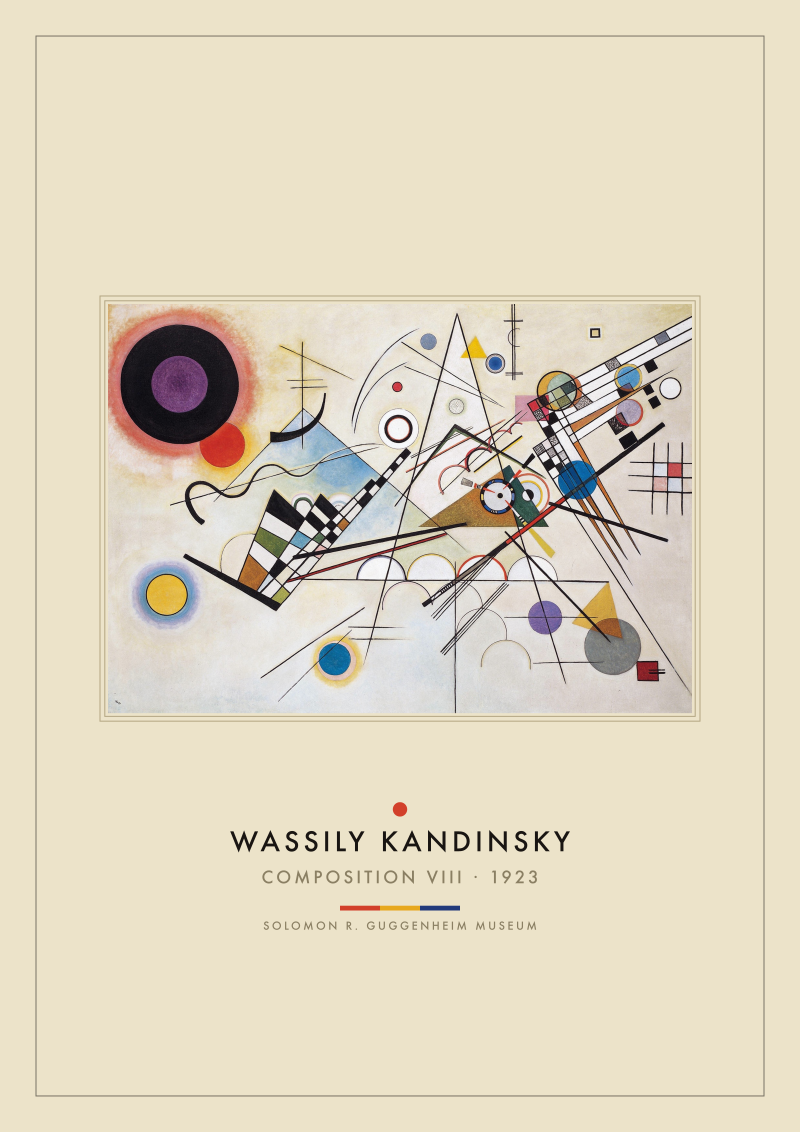
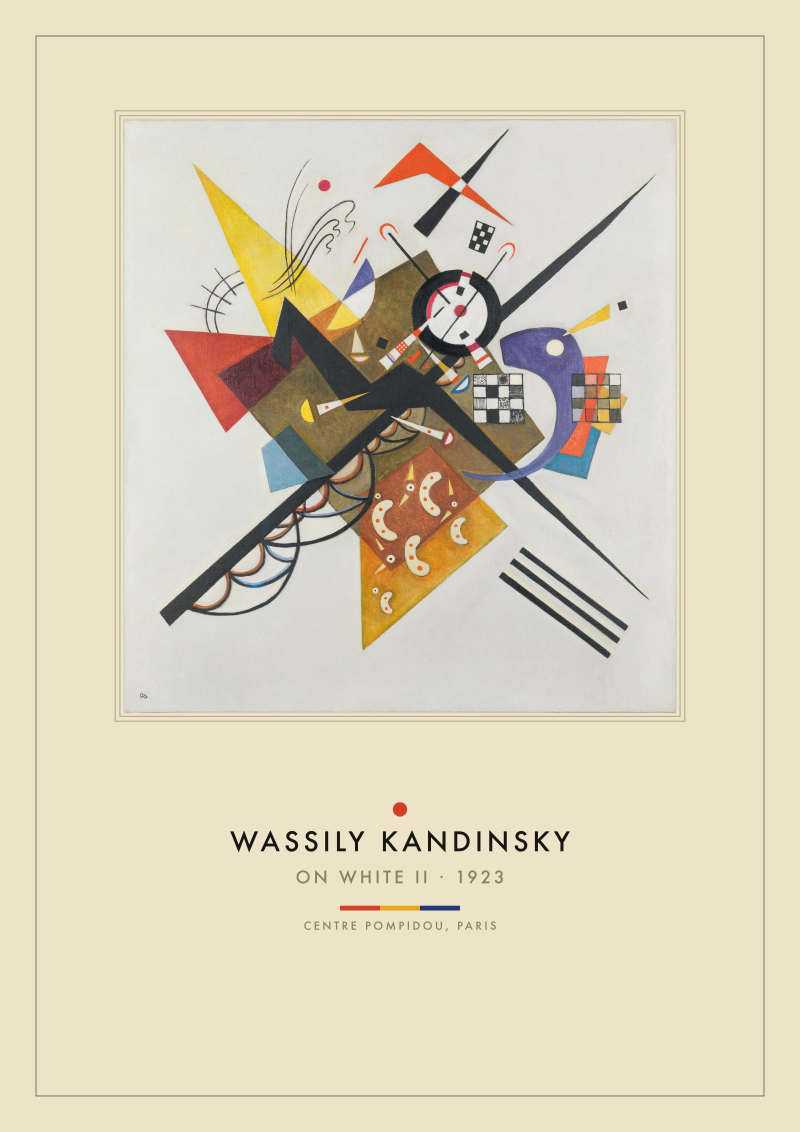
Let us be specific about what the visitor actually sees. The lettering on the side of the building, painted vertically down the concrete, still reads BAUHAUS in the sans-serif the school worked out in its own type workshop. The colour scheme inside the corridors — the reds, the yellows, the blacks used to code circulation and function — is a working diagram of the colour theory Kandinsky and Klee were teaching upstairs. This is the second survival: the notion that a building can be a manifesto without a plaque. The Dessau building teaches its own preliminary course to anyone who walks the halls with their eyes open.
What did not survive, honestly, is the utopia around it. The school imagined the workshop wing as one piece of a whole Siedlung, an integrated modernist life where the housing estate, the furniture inside it, the graphics on the wall and the pedagogy in the classrooms were one continuous argument. The housing estates got built — the Törten estate is a short tram ride away — and time has been unkind to them in a way that time has not been unkind to the school building itself. The masters' houses on Ebertallee were bombed, rebuilt, argued about, and now sit in a slightly awkward negotiation between memorial and museum. The utopia was a package deal, and the package broke apart.
The building's own restoration is honest about this. Where original detail could be documented it was restored; where it could not, the restorers left the seam visible. That is a very Bauhaus move — form following the function of telling the truth about what you know and what you do not. Our own composition Dessau Morning, with its stacked horizontal bands catching a low sun, was made thinking about exactly this: the building at the hour when it is most itself, before the tour groups arrive, when the geometry is doing all the talking. The building survived. What survived alongside it is smaller than the school hoped and larger than its critics predicted.
Scenario 2: The Preliminary Course in a 2026 Design School
Now imagine the classroom. Any foundation year, any serious design programme, anywhere in the world. Let us say the first exercise the students are given is to compose a page using only a circle, a square, and a triangle, in only red, yellow, and blue. If this sounds familiar it is because it is: the ghost in the room is Johannes Itten, then Josef Albers, then László Moholy-Nagy, each of whom ran versions of the Bauhaus Vorkurs — the preliminary course — between 1919 and the school's closure. The preliminary course is the single most successful export the Bauhaus produced. It survived by being copied so thoroughly that most schools no longer know they are copying it.
What specifically survived. The idea that before you learn to draw a chair you should learn to see a shape. The idea that colour is a relational fact — a red next to a green is not the same red as a red next to a grey — which Albers spent the rest of his career proving with the exercises that eventually became *Interaction of Color*. The idea that materials should be handled before they are represented: paper folded before paper drawn, wood joined before wood rendered. These are not decorations on a curriculum; they are the curriculum. Our own Foundation composition — the modular grid of circles, arcs and bars in primary colour — is a poster version of the first week of that course, arranged so the exercise reads as a whole rather than as a page from a workbook.
What did not survive is the mysticism. Itten ran the early Vorkurs with breathing exercises, dietary regimens, and a spiritual programme that made the school authorities nervous enough to eventually replace him. Some of that was serious pedagogy about perception and attention; a lot of it was of its moment and would not survive a modern classroom for a single afternoon. When Albers took over the course, he stripped the metaphysics out and left the exercises. This turned out to be the right move for durability. The bare exercises travelled to Black Mountain College, then to Yale, then to every art school syllabus that quietly borrowed from them for the next seven decades.
There is a smaller failure worth naming. The Bauhaus preliminary course assumed a student who arrived with no formal art training — the whole point was to unlearn academic drawing before learning to design. In 2026 the students arriving have often been shaped by fifteen years of screens, tutorials, and pre-existing visual literacy. The exercise still works, but its function has shifted from unlearning to slowing down. The circle, square, triangle are no longer a beginning — they are an intentional pause. That is a survival too, but a quieter one than the school imagined.
Scenario 3: The Modernist Living Room, One Century In
The third place we said we would look is the living room. Let us say it belongs to no one in particular — a room a magazine might photograph as an example of modernist taste. White walls. A tubular steel chair, or something meant to remind you of one. A low sideboard. A single geometric print above the sofa. This room, in some version, exists in more homes today than it did at any point during the Bauhaus's fourteen operating years. Which is a strange thing to be able to say about a school that was closed by the Nazis in 1933 and never reopened as itself.
What survived in this room is real. The Wassily chair, designed by Marcel Breuer during his student days in Dessau, is still in production, still recognisable, still doing the structural argument it was designed to make — that a chair can be a diagram of tension and compression rather than a soft object with legs. The tubular steel language spread everywhere. Flat-fronted cabinetry, exposed structure, the refusal of ornament — all of this is Bauhaus DNA showing up in a hundred million rooms whose occupants have never heard of Dessau. Form follows function, a phrase Louis Sullivan wrote and the Bauhaus adopted so thoroughly that it is now often misattributed, is the dominant taste of the century that followed.
What did not survive is the ideology behind the chair. Breuer's Wassily was not a lifestyle object. It was a proposition about industrial materials and mass production making good design available to workers — a socialist argument in bent tubing. The chair that a visitor now sits in, at a design-conscious price point, is closer in function to a status object than to a manifesto. This is not a scandal; it is the ordinary fate of radical ideas when they become desirable. But the desk should say it plainly. When a Bauhaus-descended chair costs more than a month's rent, some part of the original argument has quietly been evicted.
The other thing that did not survive well is the total interior. The Bauhaus imagined the room, the furniture, the textiles, the lamp, and the print on the wall as a single composed whole. The living room we are picturing has a Bauhaus-looking chair, a mid-century sideboard from a different tradition, a rug that gestures at Anni Albers without being one, and a print above the sofa chosen the way most prints are chosen — because it fit the space. The composed whole became a look, and the look became a shopping list. Our Archway composition, with its nested arcs rising like a gateway of period colour, is offered as one item on that shopping list too — we do not pretend otherwise. What we can promise is that the geometry inside the frame is the argument the school actually made, not a decorative echo of it.
What All Three Share
Look at what survived in each scene and a pattern emerges. In the building, what lasted was the structural idea — the curtain wall, the sans-serif signage, the colour-coded circulation — while the utopia dissolved. In the classroom, what lasted was the exercise — the circle, square, triangle, the colour studies — while the mysticism was stripped away. In the living room, what lasted was the object — the chair, the flat cabinetry, the geometric print — while the politics that produced them quietly departed. In every case, the durable part was the specific, testable, teachable move. The perishable part was the surrounding worldview.
This tracks with something the Bauhaus half-understood about itself. The school closed three times — Weimar in 1925 under political pressure, Dessau in 1932 under the same, Berlin in 1933 under the Nazis — and each time the argument moved somewhere else, carried by whoever was leaving. Gropius went to Harvard. Mies went to Chicago. Albers went to Black Mountain and then Yale. Moholy-Nagy went to Chicago and founded the New Bauhaus. The ideas that travelled were the ones that could survive being handed to a stranger in a different country. The ideas that could not — the specific German industrial context, the specific socialist programme, the specific interwar utopianism — did not make the trip.
The lesson, if we want one, is not that the durable ideas were better. Some of the lost ones were the reason the school existed. The lesson is that portability is not the same as truth. What survived a century is what could be reduced to an exercise, a shape, or a chair. Everything else needed the school itself, and the school lasted fourteen years.
Which Scenario Is You
If you came here because a Bauhaus building moved you, your interest is in structure — how a wall behaves, how a stair reads, how a colour codes a corridor. Read the school through its architecture. The Dessau building will teach you more in an afternoon than most books do in three hundred pages.
If you came here because a foundations course changed how you see, your interest is in pedagogy — how a circle and a square make an argument, how a red next to a grey is not the same red. Read the school through Albers, through Klee's teaching notebooks, through *Interaction of Color*. The exercises still work; do them.
If you came here because you like the look — the chair, the print, the flat-fronted cabinet — your interest is in taste, and there is no shame in that. Just know that the look was downstream of ideas, and that the ideas repay a visit. Some of what you like is a hundred years of argument compressed into an object. Our /shop/ compositions, including Ascending Forms, are our attempt to keep the argument visible inside the object. The rest is a room you already know how to arrange.
FAQ
Did the Bauhaus really only last fourteen years?
Yes. The school opened in Weimar in 1919, moved to Dessau in 1925 under political pressure, moved again to Berlin in 1932, and was shut down by the Nazi authorities in 1933. Fourteen operating years across three cities. Almost every idea we now call "Bauhaus" was worked out inside that short window. The disproportion between the school's brief life and its long influence is one of the genuinely strange facts of twentieth-century design.
Is "form follows function" actually a Bauhaus phrase?
No, and this is worth being honest about. The phrase was written by the American architect Louis Sullivan in 1896, twenty-three years before the Bauhaus opened. The school adopted the principle so thoroughly, and applied it so visibly across architecture, furniture and graphics, that most people today associate the phrase with Weimar and Dessau rather than Chicago. It is a fair association in spirit and an inaccurate one in citation.
What was the preliminary course and why does it still matter?
The Vorkurs, or preliminary course, was the first thing every Bauhaus student took, regardless of what workshop they would later join. It taught seeing before making: exercises in shape, colour, and material, with no reference yet to a specific craft. Versions were run by Itten, Albers and Moholy-Nagy. It matters because it was copied, adapted and absorbed into foundation years at design schools around the world. Most students today take some descendant of it without knowing.
Who taught colour theory at the Bauhaus?
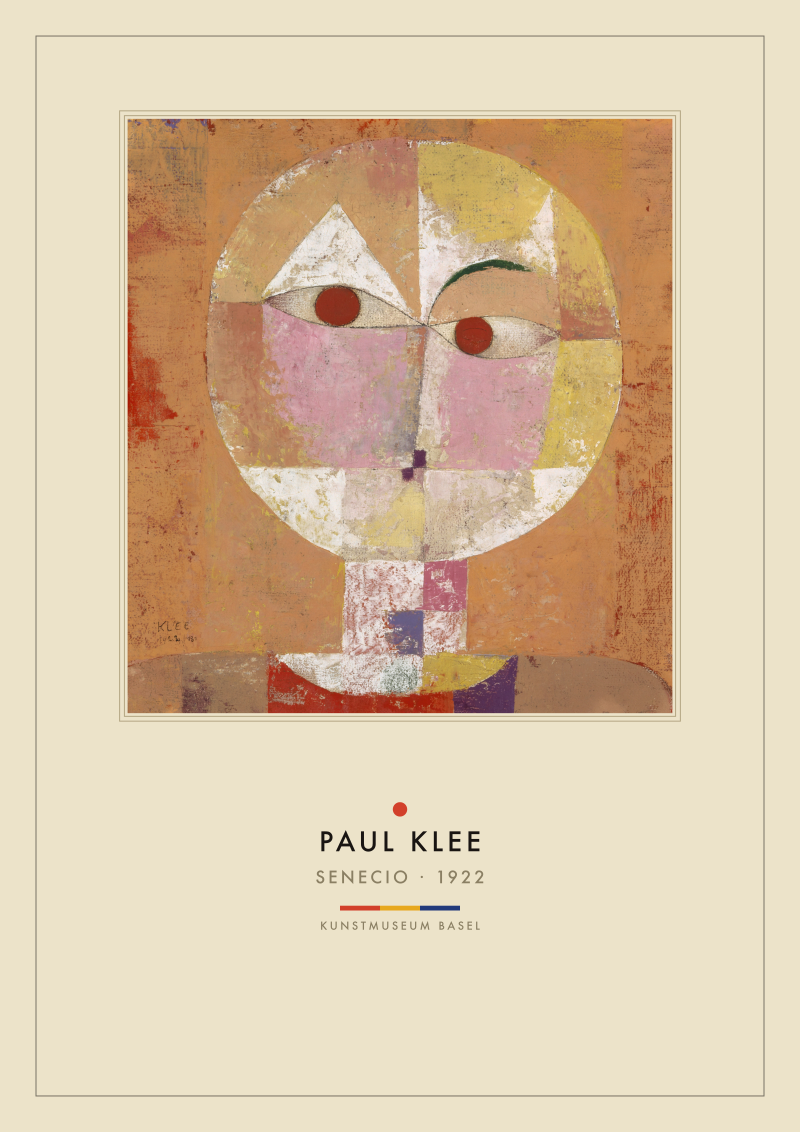
The two names to know are Johannes Itten, who ran the early preliminary course and taught colour as part of a broader theory of perception, and Josef Albers, who took over parts of the teaching and later devoted his career to colour relationships, culminating in *Interaction of Color*. Wassily Kandinsky and Paul Klee also taught colour and form theory in the school, each with their own distinct approach — Kandinsky more systematic, Klee more intuitive.
Why did the Bauhaus close?
Three times, for related but distinct reasons. Weimar shut the school in 1925 under conservative political pressure from the state government. Dessau shut it in 1932 for the same reason, once the local political balance turned against it. The Berlin iteration, run privately by Mies van der Rohe in a former factory, was closed by the Nazi authorities in 1933. In every case the pressure was political rather than pedagogical: the school's ideas were treated as a threat.
Did the Bauhaus invent modern furniture?
It did not invent it — early modernist furniture existed in several places simultaneously — but it produced some of the century's most durable examples. Marcel Breuer's tubular steel chairs, worked out during his student and teaching years at the school, became the visual shorthand for modern furniture and remain in production. What the Bauhaus contributed most was the argument that industrial materials and mass production were legitimate starting points for good design, not compromises.
What is the single best place to see the Bauhaus today?
The Dessau building itself, which reopened after careful restoration and now functions as both working institution and monument. The masters' houses on Ebertallee, the Törten housing estate nearby, and the Bauhaus-Archiv in Berlin are the natural extensions of a visit. If travel is not an option, Albers' *Interaction of Color* remains the most alive of the school's teaching artefacts — the exercises can be done at a kitchen table.
Is generative geometry a legitimate continuation of the Bauhaus?
We think so, and we would say that. The preliminary course asked students to compose with a small vocabulary of shapes and a small palette of colours, guided by rules the student made explicit. Writing code that composes within similar constraints, from a deterministic seed, is a recognisable descendant of that exercise. It is not the whole school, and it does not pretend to be. It is one honest way to keep the argument going.
From the collection
New compositions and 10% off your first print.
One email now with your code. No noise after.